
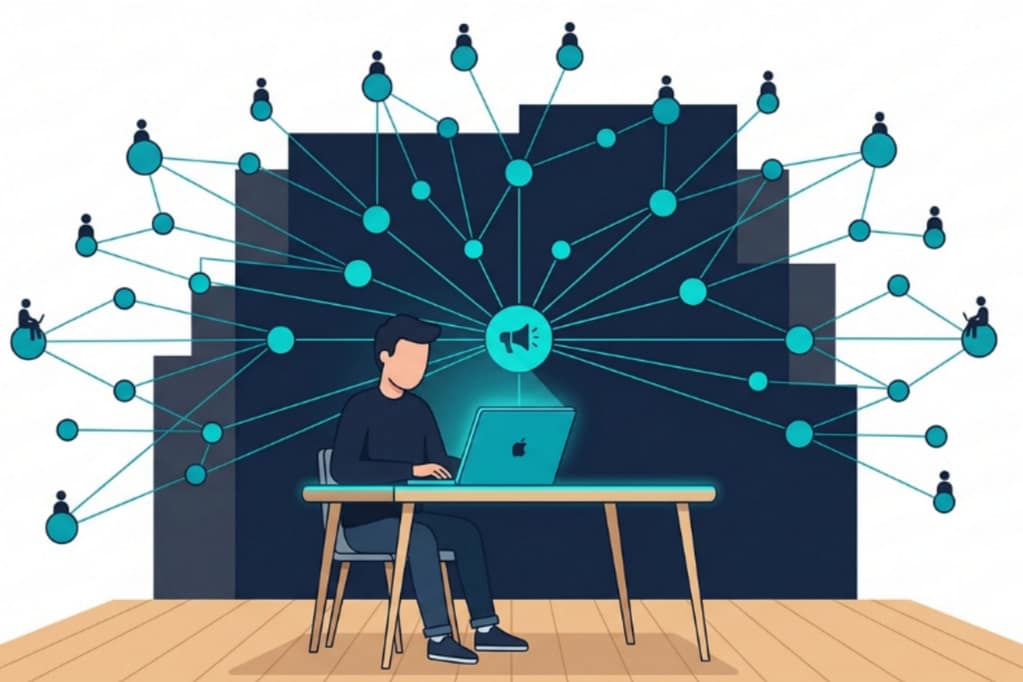

You shipped the app. The code is clean, the problem is real, and the build is something you’re genuinely proud of. But the users? They’re not coming. You’ve been here before — a brief burst of sign-ups at launch, a short plateau, then silence. If you’re a solo developer who can build almost anything but can’t seem to grow it, you’re not facing a product problem. You’re facing a system problem. Marketing doesn’t have to mean paid ads, funnels, or becoming someone you’re not. This guide breaks down how to build a solo developer marketing approach that works for a one-person operation — starting today.

Why Solo Devs Hit the Marketing Wall
There is a pattern that repeats itself across solo developer journeys: build something genuinely useful, launch it, catch a small early wave, and then watch growth stall. Not because the product is bad. Because building and distributing are two completely different skill sets — and most developers have only trained one of them.
Marketing tends to get treated as an afterthought. The product ships first, and promotion gets scrambled together afterward. This reactive approach creates a predictable loop: build, launch, stall, repeat. Even if you’ve studied every SaaS launch playbook in detail, no amount of launch-day polish closes a distribution gap that was never addressed. After a few cycles, it’s tempting to assume the market simply doesn’t want what you’ve made. But that conclusion is usually wrong.
Reaching a few hundred users without a deliberate distribution strategy is actually a positive signal. Something is working. The real issue is that you haven’t yet found the one channel, message, or audience pocket that can carry growth beyond the early adopter stage. The problem isn’t product-market fit — it’s distribution fit.
There’s also a subtler issue hiding underneath: visibility. People don’t just adopt software. They adopt software from people or brands they’ve already decided to trust. When a solo developer operates in relative obscurity — shipping product after product without putting a face or a story to the work — even a genuinely useful tool can go unnoticed. Not because it isn’t good enough, but because the audience never had a chance to build trust with the person behind it.
That’s a recognition problem, not a product problem. And the distinction matters enormously, because the fix is entirely different depending on which one you’re actually dealing with. Shipping more features won’t solve a recognition gap. Building consistent, visible presence will.
The Pattern Most Builders Fall Into
Most solo developers approach marketing the same way: attempt everything at launch, burn out within two weeks, then do nothing. They post on social media for a few days, submit to a few directories, launch on Product Hunt — and when the spike fades, so does the effort.
This scattered approach fails for a predictable reason. Marketing works through consistency and compounding, the same way good software does. One well-placed post doesn’t build an audience. Twenty consistent posts over two months start to. The developers who break through aren’t necessarily better marketers — they’re usually just the ones who committed to one channel long enough to see results.
Another common trap is chasing the wrong platform. A developer might spend weeks producing video content when their actual users are spending time in niche professional communities or industry-specific LinkedIn threads. That channel mismatch wastes real effort and produces nothing, which reinforces the belief that marketing simply doesn’t work for builders.
Then there is the branding gap — arguably the most overlooked piece. Most founders assume branding means a logo and a color scheme. But brand strategy is something deeper: it’s your positioning, your reason for existing, and the clarity of the problem you solve for a specific kind of person. Without that foundation, no promotional technique will gain lasting traction. You can publish consistently for months and still gain nothing if the core message isn’t targeted and clear.
The code ships; the developer doesn’t. But early-stage growth almost always depends on the builder being visible — sharing the journey, the setbacks, and the reasoning behind decisions. That transparency is exactly what builds trust with the users who become your earliest advocates.
The Real Fix: Marketing as a System
The shift that changes everything is simple but counterintuitive: stop thinking of marketing as promotion and start thinking of it as documentation.
You already know your product better than anyone. You understand the specific pain it solves, the type of person who has that pain, and the exact moment when the problem becomes unbearable. That knowledge is your greatest marketing advantage — you’ve just never been packaging it consistently or pointing it in the right direction.
Show up where your potential users are and talk about the problems your app solves — not the features. Features speak to people who have already decided to buy. Problems attract the people still searching for a solution. When you lead with the pain point, you enter the conversation that is already happening in your user’s head.
The second part of the system is consistency over intensity. Twenty minutes a day of focused, problem-centered communication builds more than one major push every six months. If building self-discipline has ever felt like a challenge, this is precisely where it pays off — because the developers who win at distribution are rarely the loudest. They’re the most consistent.
The third element is single-channel commitment. Not five platforms, not a newsletter plus a podcast plus short-form video — one channel, matched to where your specific users are actually spending time. LinkedIn has become a particularly strong environment for developer-led content, because audiences there actively want to hear from the person who actually built the tool — not a polished brand page.
Once traction shows up on one channel, the goal becomes systemizing that distribution — turning what works into a repeatable process before expanding.
How to Build Your Solo Dev Marketing Engine
Step 1: Find Where Your Users Actually Are
Before writing a single piece of content, do the basic competitive work. Look at apps that are similar to yours. Are they paid or free? Do they have traction? If competing products are generating real revenue or growing user bases, that confirms demand exists. Then identify where those customers spend their time — communities like Indie Hackers, newsletters, forums, or specific social platforms. That’s your starting point for distribution, and it’s far more reliable than guessing.
Step 2: Nail Your Category and Positioning
One of the most overlooked factors in early-stage growth is whether you’re competing in the right category. Positioned too broadly, users can’t tell when to choose you over alternatives. Positioned too narrowly, the addressable market is too small. Before any marketing activity, clarify what category your product belongs to and why someone in that category would choose you specifically. This is brand strategy — and it comes before any content plan, visual identity, or platform presence. Get this right, and the startup growth tactics you layer on top will actually produce results instead of noise.
Step 3: Put Your Face Behind the Product
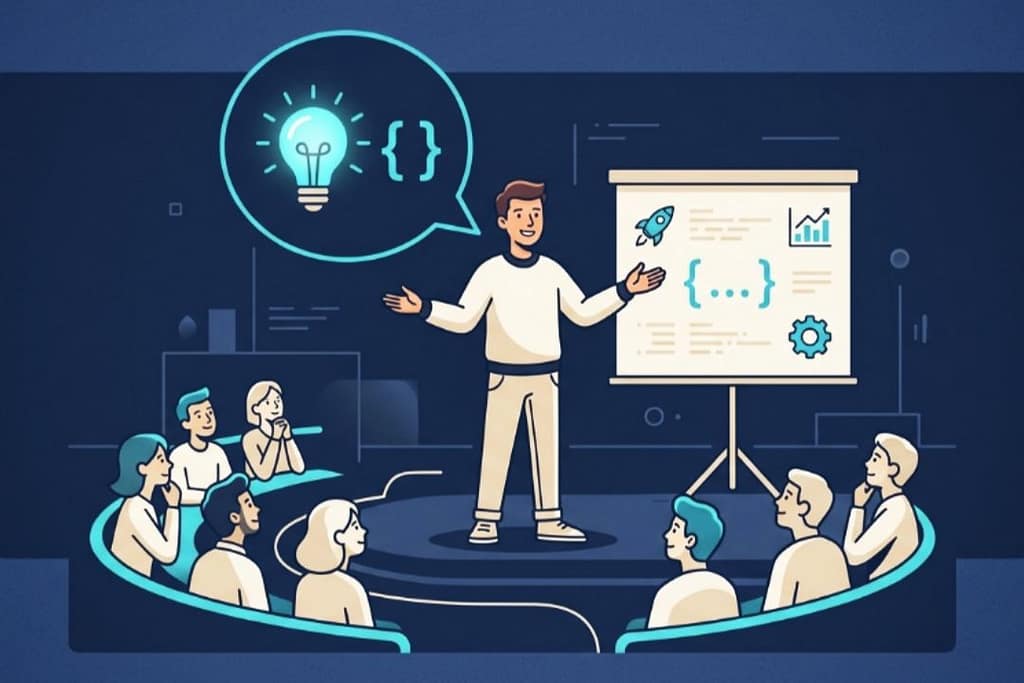
Early-stage products live or die on trust, and trust begins with recognition. You are the brand, especially at the beginning. This doesn’t mean becoming an influencer or performing for an audience. It means being honest and specific about the experience of building — what’s working, what broke, what you’re figuring out in real time.
This kind of documentation builds credibility precisely because it’s concrete and unpolished. When people see the actual thinking behind a product, they begin to trust it before it’s even ready. By the time you push for growth, a segment of your audience is already invested in seeing you succeed. That early-stage goodwill is extremely difficult to manufacture after the fact — it has to be built during the process.
Step 4: Pick One Channel and Commit Fully
Choose the platform that fits your communication style and your user base. If your product serves professionals, a presence on LinkedIn is worth serious attention right now — developer-led content performs particularly well there because the audience wants to hear from practitioners, not brands. If your product serves a creative niche, the communities those creatives frequent daily will outperform any broad social media strategy.
Once you’ve chosen a channel, commit to it for at least sixty to ninety days before evaluating. Most solo developers give up at the thirty-day mark — precisely the point before compounding effects start to show up.
Step 5: Refine What’s Already Working
Before building out a full content strategy, look carefully at how you reached your first users. Whatever got you there — even if it was informal, unscalable, or accidental — is a signal. Early traction almost always originates from one or two sources. The fastest path from a few hundred users to a few thousand is to systemize what already worked, not to layer new channels on top of what hasn’t been tested yet. Revisit the promotional techniques that earned your earliest users and ask honestly whether they can be repeated and scaled.
Step 6: Know When to Bring in Help
There comes a point where marketing capacity becomes the real ceiling on growth. When you’ve found a channel that’s working and you’re ready to scale it, two options make practical sense: bring on part-time help from a small agency that specializes in your niche, or find a co-founder whose strengths balance yours. Before you do either, make sure you’ve addressed the sales mistakes that quietly kill early-stage traction — because bringing in help before fixing the fundamentals just scales the problem, not the growth.
The builder-marketer pairing is one of the most proven early-stage combinations precisely because effective marketing — done consistently and strategically — is a full-time job, just like product development. You don’t have to do everything. You have to do the right thing, consistently, until it compounds — and then decide what help you need to carry it further.
Wrapping It Up
If you’ve shipped apps that stalled at a few hundred users, the issue is almost certainly not the product. It’s a distribution and visibility gap that no amount of additional features will fix.
The developers who break through share a common thread: they stopped treating marketing as a task to push through after shipping and started treating it as part of the build process itself. They picked one channel, showed up consistently, talked openly about the problem they were solving, and let trust accumulate over time.
That compounding is the mechanism. Solo developer marketing doesn’t produce dramatic overnight results — it produces slow, steady recognition that eventually tips into real, sustainable growth. Expecting a launch spike to carry long-term momentum is how you end up cycling through the build-launch-stall pattern. Building consistent presence around a specific problem is how you exit it.
Core Framework
- Lead with problems, not features. Your users are searching for relief from a specific pain — meet them in that search.
- Consistency over intensity. Twenty focused minutes a day builds more than a single big push every quarter.
- You are the brand. Invisible developers build invisible products. Put your reasoning and your face behind what you make.
- One channel at a time. Find where your users are, commit to that space, and systemize it before expanding anywhere else.
- Refine before you add. Understand what already drove your first users before building an entirely new acquisition path.
The gap between a few hundred users and a few thousand isn’t complicated to close. It requires being consistent, specific, and visible — in the direction of real, confirmed demand.
Your Next Step
The solo developer marketing system that works starts with one action: show up where your users are and talk about the problem your product solves. You don’t need a strategy deck or a dedicated team to begin. Start with one platform, one clear message, and twenty consistent minutes a day. If this guide helped, share it with a developer in your network hitting the same wall. And if you’re working through your growth strategy, explore more on the Klyzed blog — from startup growth hacks and avoiding sales traps to starting a SaaS from zero.
The Bottom Line
Growth isn’t a product limitation; it’s a distribution challenge. By transitioning your workflow from marketing bursts to compounding documentation, mastering one clear channel, and establishing a visible presence behind your code, you systemize long-term user acquisition cleanly as a one-person powerhouse.




Pingback: Entrepreneurship Dopamine Management 2026 – Rewire Your Brain for Profit [Founder Guide] - Klyzed
Pingback: How to Find SaaS Pain Points on Reddit and Build What People Need - Klyzed
Pingback: How to Get Your First 1,000 SaaS Users Using ChatGPT & AI Automation - Klyzed
Pingback: No One Is Going to Pay for My Vibe-Coded SaaS — Unless You Fix These Fundamentals - Klyzed