
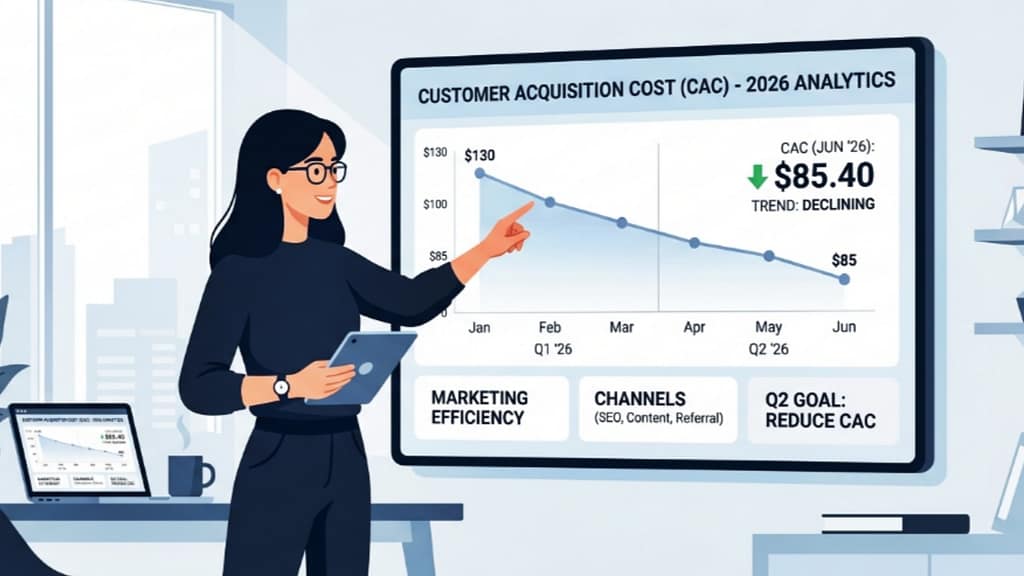

Short Answer: To successfully reduce customer acquisition costs in 2026, SaaS brands must shift from saturated, high-CAC channels like LinkedIn and paid search to highly targeted Reddit ads (cutting CPPO to $450-$900), implement product-led growth (PLG) motions to cut sales costs by 30%, and deploy “ungated value” assets. Optimizing conversion rates across key touchpoints can yield an additional 50-75% reduction in your blended CAC.
The 2026 B2B SaaS CAC Crisis: An Urgent Reality Check
B2B SaaS companies are navigating a capital efficiency crisis. According to the Benchmarkit 2025 report, the median SaaS company now spends $2.00 to acquire $1.00 of new ARR—a stark 14% increase from 2023. For companies in the bottom quartile, this metric balloons to an unsustainable $2.82 per $1.00 of ARR. Over the last nine years, customer acquisition costs (CAC) have surged by roughly 260%, with a massive 40-60% jump observed between 2023 and 2025 alone.
This steep upward trajectory is heavily driven by the performance of legacy ad networks. LinkedIn paid social costs have surged 89% since 2019, pushing paid social CAC above $2,000 for many teams. Meanwhile, Google Search Ads have experienced a total CPC explosion of 164%, with a 5.13% year-over-year increase recorded in 2025.
To scale sustainably under these conditions, growth leaders must look beyond traditional demand-generation playbooks. Understanding how to navigate these ad networks is essential, as detailed in Scaling SaaS With Ads: The B2B Founder’s Profitable Growth Playbook. However, modern acquisition strategies must also incorporate lower-cost organic and community-driven loops.
Visualizing B2B SaaS CAC Benchmarks by Channel
The chart below compares median customer acquisition costs across primary marketing channels, demonstrating the clear cost advantages of referral, organic, and alternative paid sources.
Why CAC is Skyrocketing: Key Friction Points & Market Barriers
The dramatic increase in acquisition costs is not an isolated issue. It is driven by several compounding market shifts that directly impact standard outbound and inbound strategies.
| Friction Point | Supporting Benchmark / Metric | Primary Source |
|---|---|---|
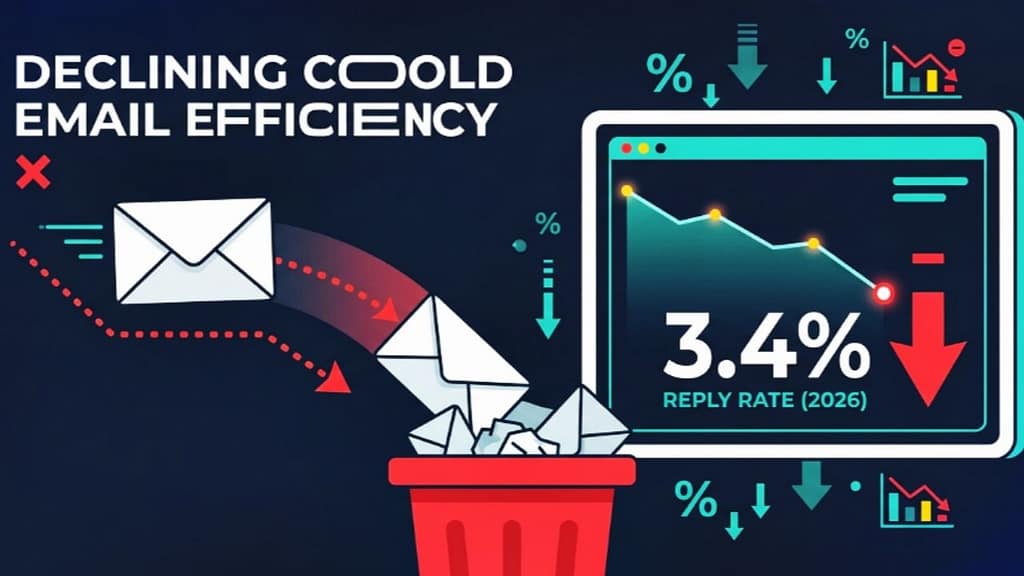
| Cold Email Reply Collapse | Reply rates dropped from 8.5% in 2019 to ~3.4% today (19 out of 20 emails ignored). | Optif-ai Sales Ops Benchmark |
| Ad Fatigue & Cost Increases | Static creatives lose relevance quickly; CTR declines as ad saturation forces costs up. | Third-party industry analyses |
| Privacy Regulation Impact | Cookie deprecation, Apple iOS updates, and GDPR/CCPA restrict targeting precision, disrupting attribution. | Multi-report consensus |
| Market Saturation | Over-allocation of spend on identical ICPs across LinkedIn and Google Ads inflates inventory costs. | SaaS community discussions |
| Elongated Sales Cycles | Average B2B sales cycles have lengthened to 134 days. | Industry benchmark data |

Step-by-Step Action Plan: Unconventional Growth Hacks That Actually Work
1. Swap LinkedIn for Reddit Ads
While enterprise LinkedIn CAC routinely reaches $3,000 to $5,000, growth teams are achieving substantial cost savings on Reddit. Reddit CPCs are averaging 60-80% lower than identical LinkedIn campaigns, yielding a Cost Per Pipeline Opportunity (CPPO) of $450 to $900.
“Text-heavy, self-aware Reddit ads that break down technical problems directly in the copy perform incredibly well. B2B audiences read long-form content when it speaks directly to their technical issues.”
— Sotros Infotech & JB2302 case studies
Reddit CPC bands typically range from $0.50 to $2.00 for broad B2B SaaS verticals, and $4.00 to $8.00 for highly specialized technical niches. If you want to refine your audience targeting, finding where your prospects congregate is key. Learn how to identify these target demographics in How to Find SaaS Pain Points on Reddit and Build What People Need.
2. Transition to Product-Led Growth (PLG) Motions
Implementing a friction-free product-led growth motion can slash average sales costs by 30%. This reduction is achieved through self-serve trials, interactive onboarding, and clear in-product upgrades. Rather than allowing friction to persist, founders must prioritize optimization over administrative delays. This principle of active execution is discussed in detail in Productive Procrastination Is Killing Your SaaS.
To maximize the impact of your PLG motion, focus on three specific levers:
- Shorten Trial Windows: Refining the onboarding sequence to guide users to a “first win” faster prevents wasted trial support costs and accelerates payment conversions.
- Optimize First-Moment Retention: Actively design the initial product experience to lead users to their “aha” moment quickly, reducing churn.
- Leverage Referral Programs: Introduce in-app viral referral mechanisms. Referral-based loops can achieve a remarkably low CAC of $150, making them highly capital-efficient channels.
Designing structured acquisition loops requires a disciplined approach to product management. Discover how to build sustainable product growth loops in How to Success a SaaS: 10 Battle-Tested Lessons From Building (and Killing) 15 Products.
3. Optimize Core ICP and Conversion Paths
Broad messaging in search campaigns can quickly drain marketing budgets. By conducting detailed segment analyses and utilizing tight negative keyword lists, growth marketers can reduce acquisition waste by 40%. This practice ensures your ad spend is strictly allocated to high-lifetime-value (LTV) prospects.
Additionally, coordinating three key conversion updates—MQL response times, structured product demos, and balanced marketing channels—has been shown to reduce CAC by 50% to 75%. If you are leveraging outbound outreach or cold campaigns, utilizing automated workflows is a great way to maintain fast response times. Review efficient solutions in Time-Saving Tools 2026 – Reclaim 100 Hours.
4. Deploy the “Ungated Value” Strategy
Instead of requiring a demo booking for basic product exploration, drive traffic to interactive sandboxes, online tools, or comprehensive technical documentation. Allowing prospects to experience value before forcing a signup form removes friction and naturally generates qualified leads.
This strategy aligns closely with automated onboarding models. For examples of automated value-delivery models, check out How to Get Users Using ChatGPT: The Founder’s Playbook for AI-Driven Signups.
Key Benchmarks and Best Practices Summary Table
To help guide your channel strategy, the following table lists the CAC benchmarks, practical actions, and sources derived from recent industry reports:
| Acquisition Channel | Target CAC (2026) | Primary Strategic Recommendation | Source Data |
|---|---|---|---|
| Referrals | $150 | Establish automated in-app referral rewards. | Phoenix Strategy Group 2025 |
| Organic SEO | $290 | Focus content on high-intent terms (competitor, pricing, validation). | Phoenix Strategy Group, SaaSHero |
| Combined (Organic + Paid) | ~$273 (Blended) | Maintain a balanced funnel ratio ($205 organic / $341 paid). | Multi-channel industry study |
| Paid Search | $802 | Apply tight negative keyword lists to target intent. | Search performance reports |
| SDR-Driven Outbound | Up to $1,980 | Replace broad outreach with targeted, multi-channel trust-building. | Optifai Sales Ops Benchmark |
| LinkedIn Paid Social | $2,000+ | Transition high-funnel budgets to Reddit to lower CPPO. | Benchmarkit 2025 |
Frequently Asked Questions (FAQ)
What is a good CAC for B2B SaaS?
A good customer acquisition cost is relative to your target segment and ACV. In 2026, the overall SaaS average sits at $702. However, standard benchmarks vary significantly by market tier:
- SMB-focused SaaS: $98 (median) to $200-$700.
- Mid-Market SaaS: $1,200 to $2,000.
- Enterprise SaaS: $5,000 to $250,000+ (typically for ACV >$100K).
How do you calculate customer acquisition cost in SaaS?
To calculate basic CAC, divide your total sales and marketing expenses (including ad spend, software tools, and personnel salaries) over a specific time period by the number of new customers acquired during that same window.
What is a healthy LTV to CAC ratio for B2B SaaS?
An LTV:CAC ratio of 3:1 or better indicates a healthy, scalable business model. A ratio of 1:1 indicates the company is only breaking even on acquisition costs, which is unsustainable when accounting for retention and operating overhead.
What is the average CAC payback period for B2B SaaS?
While payback periods depend on your target segment, efficient acquisition models (such as optimized organic SEO) can achieve complete cost payback in under 6 months, yielding significant ROI potential over the customer life cycle.
How does Product-Led Growth (PLG) reduce CAC?
PLG motions lower CAC by decreasing reliance on high-touch sales teams, cutting overall sales costs by roughly 30%. By focusing on frictionless trial structures and fast time-to-value, companies can convert users organically in-app rather than relying on expensive, manual sales cycles.
How do you calculate blended vs paid CAC?
Blended CAC aggregates all customers acquired across both paid and unpaid organic channels (averaging ~$273, where organic CAC is ~$205 and paid is ~$341). Paid CAC strictly calculates the cost of customers acquired directly through paid campaigns (such as paid search at $802 or LinkedIn paid social above $2,000).
How do you optimize a leaky funnel to reduce CAC?
To optimize a leaky funnel, map your key conversion stages to identify where the largest drop-offs occur. Implementing coordinated updates to MQL response times, onboarding sequences, and pricing clarity can drive a 50% to 75% reduction in CAC.




Pingback: B2B SaaS Growth Marketing Strategy: Beyond the Playbook - Klyzed
Pingback: B2B SaaS Demand Generation Strategy: Reddit's 5/95 Playbook - Klyzed
Pingback: B2B SaaS Lead Generation Ideas: The 2026 Signal Playbook - Klyzed