

Short answer: The B2B SaaS lead generation ideas actually working in 2026 aren’t about more volume — they’re smaller, signal-triggered lists (hiring posts, funding rounds, tech-stack changes), verified contact data before any sequence goes out, and Reddit/Quora threads turned into comment-to-lead funnels. Founders who cut their LinkedIn outreach from 400+ generic contacts to 80-120 curated prospects a week across multiple profiles report a noticeable jump in replies, and one B2B lender hits 10-15 leads a day running a fully automated signal engine instead of a team of SDRs.
Spend an afternoon in r/SaaS, r/b2bmarketing, r/b2b_sales, or r/LeadGeneration right now and you’ll see the same sentence in a dozen different threads: “every channel feels broken.” Cold email, LinkedIn, and ads have gotten so saturated and automated that standing out — or even landing in an inbox at all — is harder than it’s ever been. Founders describe blasting 10,000 generic leads and calling it “spray and pray,” then watching it quietly torch their domain reputation for a handful of shallow conversations with zero buying intent.
The deeper problem isn’t even the channel — it’s what’s feeding it. Multiple threads point to the same root cause: bad, unverified contact data. It doesn’t matter whether you’re on email, LinkedIn, or Instagram — if the data underneath is wrong, you’re burning a channel for nothing. And even founders who do generate leads often lose them anyway, scattered across spreadsheets, sticky notes, and WhatsApp threads, which operators in these communities describe as a genuine source of emotional burnout and “silent churn.”
This piece pulls together what’s actually working for the founders and growth leads in these communities right now — not theory, not a generic “12 lead gen strategies” listicle, but the specific tactics, tools, and numbers they’re reporting from the field.
One Founder’s Instagram DM Funnel, In Numbers
Instagram doesn’t usually make anyone’s B2B SaaS lead generation list — until you look at what one founder in these threads actually reported after running a targeted DM campaign into HubSpot via Zapier.
That’s a 6% booked-call rate off cold Instagram DMs — piped straight into a CRM with no manual copy-paste. The mechanism behind it matters more than the channel: targets were identified by scraping bios for specific keywords, new accounts were ramped slowly over 30 days to avoid spam flags, and every prospect got a three-touch follow-up sequence instead of one message and a prayer.
What’s Actually Broken (And Why)
Before the fixes, it’s worth naming the pain points precisely — because the founders in these threads aren’t vague about it:
| What Founders Are Experiencing | Why It’s Happening |
|---|---|
| Every channel feels saturated | Cold email, LinkedIn, and ads are noisy and heavily automated — it’s harder to stand out or even land in an inbox. |
| “Spray and pray” lists | Blasting 10,000+ generic leads kills domain reputation for a handful of shallow, low-intent conversations. |
| Bad or unverified data | Wrong contact info wastes effort and burns the channel regardless of whether it’s email, LinkedIn, or Instagram. |
| Lead management chaos | Leads get lost in spreadsheets, sticky notes, and WhatsApp threads, causing missed follow-ups and “silent churn.” |
| AI-outreach “smell” | Bland, templated messaging that prospects spot instantly and ignore. |
| Referrals that won’t scale | The most reliable deals — but too unpredictable to build a growth model around. |
“Spray and pray.” “Every channel feels broken.” “Burned our domain reputation.” “Chaotic spreadsheets and WhatsApp threads.” That’s the actual language founders are using in these communities right now — not marketing-speak, just the reality of running outbound in 2026.

Why “Spray and Pray” Is Dead: Signal-Based Outbound That Works
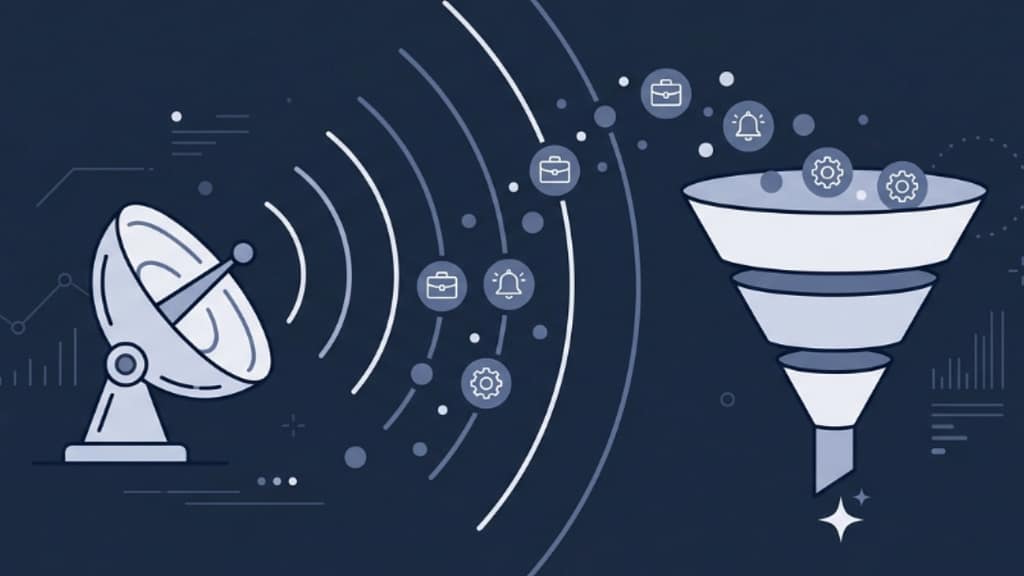
The founders replacing generic lists with something better are all doing a version of the same thing: triggering outreach off a real event instead of a static list. In r/b2b_sales, owners describe replacing SDRs entirely with automated systems that monitor intent signals — a new job posting, a funding round, a tech-stack change, a new permit — and fire off personalized outreach the moment one of those signals fires.
One concrete version of this: setting LinkedIn Sales Navigator alerts for a specific hiring trigger — say, a company posting an IT Manager role — then using an email finder to reach the decision-maker directly with a solution tied to that exact event. Another founder went narrower still: picked a single target account, studied every employee’s LinkedIn profile, company news, and product, then built a bespoke hypothesis per role plus a tailored landing page showing exactly how their product fit that account’s specific context.
The clearest proof point for this approach comes from a B2B lending business that needs 10-15 leads a day to stay healthy. Instead of scaling a human SDR team to hit that number, they moved to a fully automated, signal-driven outbound engine — one that also imposes strict daily outreach caps to mimic human behavior and protect domain reputation, rather than blasting thousands of emails indiscriminately. If you’re rethinking what “acquisition cost” actually means once you factor in burned domains and wasted SDR hours, it’s worth reading how B2B SaaS founders are cutting customer acquisition costs in 2026.
From 10,000 Leads to 100 Fans: The “Smaller + Tighter” Playbook
The single most repeated pattern across r/b2bmarketing and r/b2b_sales is founders getting better conversations from fewer leads after tightening their ICP down to one niche, one role, and one concrete trigger. It’s a direct rejection of the volume-first playbook — and the numbers back it up.
| Old Approach | What Founders Shifted To | Reported Result |
|---|---|---|
| 400+ generic LinkedIn contacts from a single profile | 80-120 carefully chosen prospects per week, spread across multiple profiles | Noticeable increase in replies and meaningful conversations |
| Unverified contact lists | Running lists through verification tools like Fullenrich before any sequence starts | Protects domain health, avoids burning the channel |
| Single-source prospecting | Enrichment stacks combining Apollo for data and Clay for enrichment, plus tools monitoring Reddit/MSP discussions | Live pain points turned directly into outbound angles |
| One LinkedIn account, high volume | Distributed outreach across profiles using tools like HeyReach (with Expandi and Lemlist also tested) | Stays within platform limits while lifting weekly send volume |
The Instagram DM campaign from earlier in this article is really the same principle applied to a channel most B2B SaaS founders ignore entirely: 50-60 DMs per account, an 18% response rate, and 6% of respondents booking a call — all fed straight into HubSpot through Zapier. Some founders layer in phone calls and LinkedIn messages on top, explicitly referencing prior touches (“mentioned my calls in LinkedIn messages”) to deepen the connection before the prospect ever books time. If you’re running lean without a growth team, this same “smaller, sharper, multi-channel” logic is the backbone of how solo developers are marketing their apps in 2026.
Reddit, Quora, and “Dark Social”: Turning Conversations into Pipeline
The communities this article draws from — r/SaaS, r/b2bmarketing, r/b2b_sales, r/LeadGeneration, and Quora spaces — aren’t just where founders vent. They’re being actively mined as a live intent feed. Several 2026 playbooks describe tools that track discussions on Reddit and LinkedIn in real time, notifying founders the moment a relevant thread appears so they can plant a genuinely useful, value-first comment rather than a sales pitch.
From there, the comment-to-lead funnel is consistent across threads: answer in real depth, attach a micro-asset (a checklist, a calculator, a short framework), and only then move the interested person into a DM or a landing page. No links dropped into the first comment, no obvious pitch — just enough genuine value that the person asks for more. It’s a pattern worth studying directly if you want a repeatable version of it: how to find SaaS pain points on Reddit and build what people actually need and the B2B SaaS demand generation strategy built around Reddit’s 5-95 rule both walk through this in more depth.
The mindset shift is treating Reddit and Quora as intent-rich channels in their own right for early-stage B2B SaaS — not as an afterthought “traffic source,” but as a place where your actual buyers are already describing their problem in their own words, unprompted.
Stop Losing Leads in WhatsApp: Systemizing Follow-Up Without Burning Out
None of the above matters if the leads it generates die in a spreadsheet. The emotional toll of manually chasing follow-ups — and the anxiety of watching opportunities slip through the cracks — comes up repeatedly in these threads, and it’s a big part of why some founders have architected systems to remove humans from prospecting and follow-up entirely.
The B2B lender mentioned earlier runs an automated workflow that handles follow-ups at fixed intervals — day 3, day 7, day 14 — with every lead visible in a central dashboard. Humans only step in once a lead actually replies. Other founders integrate Instagram DMs, LinkedIn, and Reddit leads directly into a CRM via Zapier, which removes the manual copy-paste step entirely and closes off the “lost in chats” problem for good. The same discipline that stops leads from silently dying in a WhatsApp thread is worth applying downstream too — it’s the same instinct behind reducing SaaS churn in 2026: nothing falls through the cracks because nothing is tracked from memory.
There’s also a small, repeatable fix for the referral problem named earlier — reliable deals that are impossible to predict. Several founders in r/b2b_sales now add one question to every off-boarding checklist: “who are 2-3 peers facing the same issue?” It doesn’t make referrals scalable on its own, but it turns them from a hope into a process that runs after every closed deal.
Best Practices at a Glance
| Old Approach | 2026 Best Practice | Why It Works |
|---|---|---|
| Blast 10,000+ generic leads | Target 80-120 curated prospects per week, per profile | Founders report a noticeable increase in replies after shrinking the list |
| Guess at timing | Trigger outreach off real signals (hiring, funding, tech-stack change) | Outreach matches an actual buying moment instead of a cold blast |
| Unverified contact lists | Verify data (e.g. via Fullenrich) before any sequence goes out | Protects domain reputation on any channel |
| Memory-based follow-up | Automated day-3 / day-7 / day-14 sequences in a central dashboard | Humans only step in once a lead replies, cutting burnout |
| Hoping for referrals | Ask “2-3 peers with the same issue?” at every off-boarding | Turns an unpredictable source into a repeatable motion |
FAQ: B2B SaaS Lead Generation Ideas
What’s the most reliable B2B SaaS lead generation idea for 2026?
Founders consistently name referrals as their most reliable source of closed deals — the catch is they’re impossible to predict at scale. That’s why the founders getting the best results pair referrals (systemized with a simple off-boarding question) with signal-based outbound, which can be scaled deliberately.
How many LinkedIn prospects should I target per week?
Founders who shifted from 400+ generic contacts on a single profile to 80-120 carefully chosen prospects per week, spread across multiple profiles, reported a noticeable increase in replies and meaningful conversations.
Is Instagram DM actually a legitimate B2B SaaS lead gen channel?
Yes, when it’s run deliberately. One founder’s campaign — 50-60 DMs per account, targets identified by scraping bios for keywords, accounts ramped over 30 days to avoid spam flags, and a three-touch follow-up sequence — produced an 18% response rate and a 6% booked-call rate, fed straight into a CRM.
How do founders stop losing leads between channels?
By automating the follow-up instead of relying on memory: fixed day-3/day-7/day-14 sequences visible in a central dashboard, with social channels (Instagram, LinkedIn, Reddit) piped directly into a CRM via a tool like Zapier so nothing sits in a chat thread waiting to be forgotten.