

There is a conversation I keep seeing play out in nearly every founder community I follow. Someone ships a product over a weekend using AI tools, posts about it with obvious excitement, and then, weeks later, asks why nobody is paying. I have spent a long time watching this cycle repeat. The code is live, the landing page is clean, Stripe is connected — and yet, silence.
The honest answer most people are not ready to hear is this: no one is going to pay for your vibe-coded SaaS if you built it before you understood who needs it and why they would trust you with their workflow. The hard part was never writing the code. It was earning the right to a recurring payment from a stranger.
I have seen this same trap catch technically strong founders and complete newcomers alike. The tools have changed; the fundamentals have not. If you are serious about understanding how to start a SaaS business from the ground up, what follows is the framework that actually separates projects that monetize from ones that quietly disappear.
Why “Built It Fast” Is the Wrong Pitch for a Vibe-Coded SaaS
The widespread assumption driving most vibe coding projects right now is that AI removed the barrier to entry for SaaS. That part is true. But it created a new problem that most builders are not accounting for: if building your product is easy, cloning your product is equally easy.
The Trust Deficit Nobody Is Talking About
When a potential customer lands on your tool, they are not evaluating your code quality. They are running a risk calculation. They want to know: Will this still work in six months? What happens when something breaks? Is this person serious about supporting me?
Customers do not pay because software exists. They pay because they believe the person behind that software will not disappear and leave their workflows broken. A landing page built in a weekend signals, accurately or not, that the product might be abandoned just as fast.
I have watched founders obsess over feature parity with established competitors while completely ignoring the credibility gap. Your established competitor has years of support tickets answered, a changelog people can actually read, and a recognizable name in the niche. You have a domain that is twelve days old.
Customers do not buy software. They buy confidence that the product — and the person behind it — will still be there when something breaks.
The Commodity Problem
Coding has officially moved from the expensive column to the cheap column. That is a meaningful shift, but most builders are still optimizing for the wrong thing. They are proud of shipping fast — and speed is fine — but speed is not a value proposition to a paying customer. In some contexts, it actively reduces trust. A buyer thinking they built this in two days is also thinking they could walk away from it in two days.
The expensive parts of a SaaS business are still expensive: compliance, security, integrations, customer support, edge case handling, and the slow work of being present in a niche long enough for people to recognize your name. None of that is solved by a good system prompt. Optimizing for build speed over trust signals is one of the core sales mistakes founders make when they are early.
The Distribution Gap
Beyond trust, the single most underestimated problem in vibe-coded SaaS is distribution. Building the product is now the fast part. Finding people who need it, convincing them it solves a real pain, and moving them through a buying decision — that is still slow, manual, and expensive. Plenty of founders are shipping MVPs without having spoken to a single potential customer first. The result is not a business; it is an unvalidated prototype with a Stripe integration.
If you want a structured approach to fixing this problem as a solo builder, the solo developer marketing playbook covers the full acquisition loop from zero audience to paying users.
The Framework for Building a Vibe-Coded SaaS That Actually Monetizes
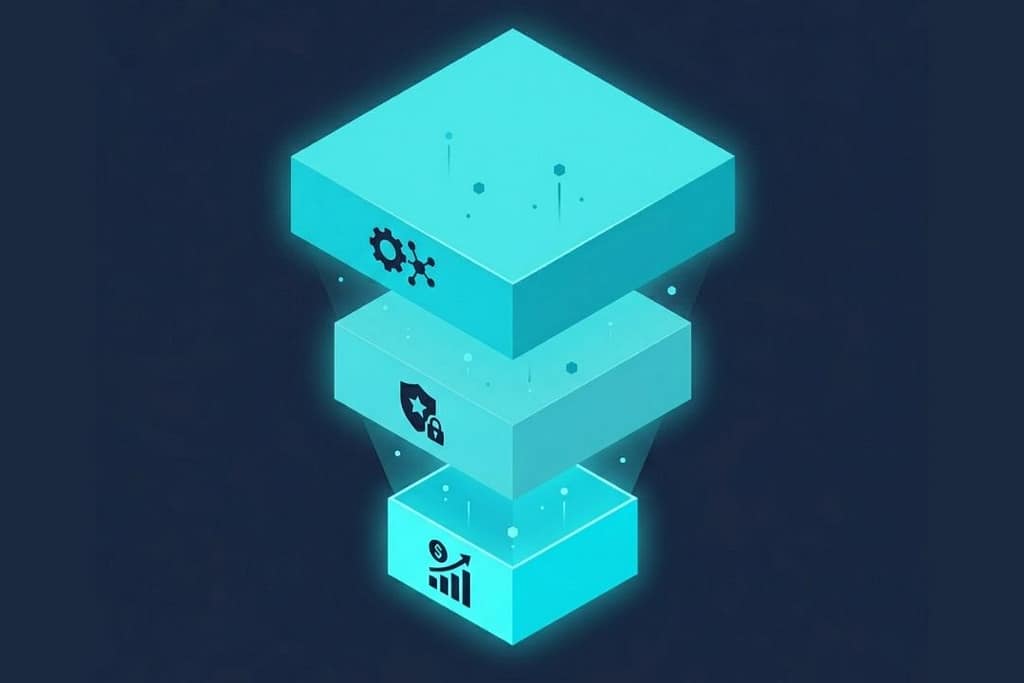
This is not about abandoning vibe coding as a method. AI-assisted development is a legitimate and efficient way to build. The issue is what surrounds the build. Here is the operational sequence that separates the projects that monetize from the ones that quietly disappear. If you are still searching for where to start, a focused look at profitable SaaS niches where pain is already validated will save you months of wasted effort.

Phase 1: Validate the Pain Before You Write a Single Prompt
The most expensive mistake I see founders make is opening a code editor before they know who they are building for. Start with a specific, painful workflow problem — preferably one that costs someone time or money on a recurring basis. Broad ideas (“an AI writing tool for everyone”) have no natural buyer. Narrow, specific problems (“a compliance tracker for school districts managing FERPA documentation”) have a buyer who already feels the pain.
Talk to at least ten people in the target niche before building. Do not ask if they would use your idea. Ask them to describe the most frustrating part of the workflow you want to solve. If the same complaint surfaces again and again, you have a signal. If you get blank stares, you have a solution without a problem. The AI business idea framework on Klyzed walks through exactly this validation process in under an hour.
⚠️ Common Pitfall: Skipping this phase because the build feels like the more exciting part. Validation conversations are slow and occasionally discouraging. Skip them and you will spend months building something nobody asked for.
Phase 2: Build to a Defensible Standard, Not a Weekend Timeline
Vibe coding is a method, not a quality setting. The mistake is conflating the two. I have spoken with founders who spent six months on a vibe-coded project, rebuilding it twice, running exhaustive testing, and handling compliance requirements themselves. That is not a weekend project — it just did not require them to write every line manually.
Your product should reach a quality level where you would personally pay for it if you were the customer. Security matters. Edge cases matter. Data privacy matters — especially if you are selling to businesses. A broken product is not a product. Once real users are in the system, a single broken workflow can create a cascade of support tickets and churn. Getting there requires the kind of sustained discipline that hype-driven weekend builders rarely commit to.
⚠️ Common Pitfall: Shipping before the product handles failure states. Users are not forgiving of errors they did not anticipate, and first impressions are very difficult to recover from in a crowded SaaS market.

Phase 3: Build Trust Infrastructure Before You Build Features
Trust is not a feature you add later. It is built through behavior over time. Answer every support request yourself at the start. Be explicit about what the product does and does not do. Show who is behind it — a real person, a real face, a real reason why you are building in this specific niche.
The “built it in two days” framing hurts you even when it is true. Say instead: “I have been working in this niche for X months and noticed a gap.” The outcome is the same product, but the positioning signals staying power rather than experimentation. Changelog updates, transparent roadmaps, and fast responses to edge cases all function as trust signals before anyone pulls out a credit card. The product cannot build this credibility for you.
⚠️ Common Pitfall: Treating support as a distraction from building. Early support interactions are your best source of product intelligence and your best opportunity to convert skeptical trial users into paying customers.
Phase 4: Treat Distribution as the Primary Job
Once the product is at a shippable, defensible quality level, distribution becomes the full-time work. Most founders flip this ratio: they spend 80% of their time building and 20% trying to find customers. That math produces graveyard projects.
Distribution in a competitive SaaS market means picking a specific channel and executing it for long enough to see results. Content in the niche, communities where your target buyers already spend time, cold outreach to businesses that fit the exact pain profile — these are the methods that move the needle. Crossing your fingers and waiting for organic search traffic on a new domain is not a distribution strategy. For a full breakdown of how to scale without a team, the AI startup growth playbook covers exactly this problem across seven actionable channels.
Distribution is the only real moat left. If your only competitive advantage is “I asked an AI to build it first,” you don’t have a business — you have a hobby project waiting for a graveyard.
⚠️ Common Pitfall: Spreading across every platform at once and measuring nothing. Pick one channel, build a feedback loop, and iterate before adding another.
Frequently Asked Questions
Do you have to pay for vibe coding?
Many vibe coding tools offer free tiers sufficient for early prototyping — Claude, ChatGPT, and similar models have usable free access. At scale or for production-grade development, you will likely pay for higher context limits and API usage. The real costs are not the AI credits; they are the infrastructure, compliance work, and time required to make a product production-ready.
Do vibe-coded apps make money?
Yes, but not automatically. Founders who have monetized vibe-coded products consistently report that the build was the fast part and distribution was the hard part. A vibe-coded product can make money if it solves a specific painful problem, reaches the right audience, and is supported by someone who stays around to handle edge cases and build customer trust over time.
Can I vibe code a SaaS?
You can use AI tools to write the majority of the code in a SaaS product. Many founders are doing exactly this. The question is not whether you can vibe code a SaaS — it is whether you can handle everything the AI does not write: compliance requirements, security architecture, edge case logic, and the ongoing maintenance that keeps real customers satisfied. For broader context on where the model stands right now, read whether SaaS is actually dead in the AI era.
Can I do vibe coding for free?
For early prototyping and MVPs, free tiers on tools like Claude and ChatGPT are often sufficient. As your project grows in complexity, token costs and API usage typically push you into paid tiers. Infrastructure costs — hosting, databases, payment processing — are separate and apply regardless of how the code was written.
What are the problems with vibe-coded apps?
The most common failure points are: security gaps that the developer does not know how to audit, code architecture that becomes difficult to maintain or extend, compliance requirements the builder is not equipped to handle, and edge cases that only surface with real user traffic. None of these are unique to vibe coding — poorly architected software has always had these problems — but they are more likely when the builder does not fully understand the codebase they are shipping.
Is vibe coding risky?
The risk in vibe coding is proportional to the gap between what was built and how well the builder understands it. If you ship something you cannot debug when it breaks, you are exposed. If a security issue surfaces and you cannot trace it in the codebase, you are exposed. The mitigation is not to avoid AI tools — it is to build understanding alongside the build itself, document decisions, and be honest about what your product is not yet ready to handle. TechCrunch’s breakdown of vibe coding and security covers the technical risk angle in greater depth.
The Bottom Line
The reason no one is going to pay for your vibe-coded SaaS is rarely the vibe coding itself. It is everything that did not get built alongside the code. AI lowered the cost of writing software — it did not lower the cost of earning a customer’s trust, building a distribution channel, or staying present in a niche long enough to matter. Those costs are exactly what they have always been.
- Vibe coding lowered the cost of building — not the cost of earning trust. Those are entirely different problems requiring entirely different effort.
- If your product can be cloned over a weekend, your only real moat is trust, distribution, and domain authority — not the codebase itself.
- Validate the pain before you build. Talk to real people in the niche. Skip this and you will spend months shipping something nobody asked for.
- Build to a standard you would personally pay for — security, edge cases, and compliance are not optional additions you fix after launch.
- Treat distribution as the primary job once the product reaches a shippable standard. Content, community, and direct outreach beat passive traffic on a new domain every time.
- The “built it in two days” framing actively undermines buyer confidence. Position around your niche knowledge and long-term commitment, not your build speed.
- For a real-world example of what disciplined SaaS execution looks like end-to-end, the SaaS launch playbook from a founder who hit $61K MRR is worth reading in full.